In honor of the Organic Farmers Association’s 10 year anniversary in 2026, we wanted to recount a small piece of America’s organic history and recognize the groups, movements, and people that led to the creation of this organization. The entire history of organic agriculture is nearly as old as human civilization; recounting our current organic movement cannot overshadow centuries of agricultural innovation. In North America, Indigenous peoples managed regenerative organic agricultural systems for thousands of years before European settlers arrived. Following colonization enslaved people and migrants continued to influence organic practices and principles in the United States. Within this larger history, the current U.S. organic movement, which is in essence a modern adaptation of indigenous knowledge from around the world, has just been around for under a century.
Early U.S. Organic History
In 1940, J.I. Rodale founded the Rodale Organic Gardening Experimental Farm in Pennsylvania, (1) educating readers across the country about organic principles and techniques through his magazine. In the 1950’s the U.S organic movement saw a groundswell of momentum as public awareness about the health and environmental impacts of synthetic agricultural chemicals grew. The 1960s counterculture motivated back-to-the-landers to begin organic farms across the country, and by the 1970s, people were organizing around the concept of organic.
Maine Organic Farmers and Gardeners Association (MOFGA) (2) and the Northeast Organic Farming Association of Vermont (NOFA-VT) (3) both formed in 1971. IFOAM-Organics International was formed in 1972, (4) California Certified Organic Farmers (CCOF) was founded in 1973, (5) followed by Oregon Tilth in 1974, (6) and the Organic Growers and Buyers Association (MN) in 1976. (7)
Consumer interest continued to grow through the 1970s and 80s, leading to a growing number of organic farmers and processors to meet this demand, and more state organizations and organic certification bodies to support these growers. Though the federal government declined to regulate this growing industry, these organic farming organizations created early standards for organic certification. Some state legislatures also saw the need to establish standards for certified organic foods, and in 1973, Oregon became the first state to pass a law defining the term “organic.” By 1997, 40 organic certification agencies–12 state and 28 private or nonprofit– conducted third-party organic certification. (8)
Despite having a shared goal, the process by which individual states and other certification agencies regulated organic agriculture differed. While general organic principles were similar, the rigor and enforcement of the regulations across states and certification agencies were inconsistent. (9)
While having a nonuniform standard state-by-state may have been confusing for consumers, it actually awarded farmers significant power when it came to setting certification standards. Founder of the International Organic Inspectors Association and former NOSB chair (certifier seat), Jim Riddle recounts that prior to the formation of OFA (and other current organic coalitions, boards, and associations), organic certification agencies provided a place for organic farmers to engage in determining what certification standards would look like. Additionally, some certification organizations were involved in research, education, and advocacy, and represented farmers in local and regional issues.
However, as the organic sector continued to grow in popularity and see commercial expansion, conflicting state and private organic labels became a greater issue, and by the late 80s, stakeholders of the organic sector recognized a need for a single standard. (10)
Engaging On the National Level
Concerned environmental and consumer groups demanding clear, uniform organic standards, and farmers and processors seeking solutions for interstate commerce, brought the issue of inconsistent organic standards to the national stage.
As a result, members of the U.S. Senate Committee on Agriculture, Nutrition, and Forestry (led at the time by Senator Patrick Leahy) started working on an act to be included in the 1990 Farm Bill (11) that would establish national organic food standards, which we now know as the Organic Foods Production Act (OFPA).
Aware of the changes to come, in 1989, at an organizing meeting in Leavenworth, Kansas, (12) farmers and representatives from organic farmer organizations founded the Organic Farmers Association Council (OFAC) an “autonomous constituency group” within the Organic Trade Association (OTA), then called Organic Foods Production Association of North America (OFPANA). (13)
Members of OFAC (see the list here) primarily represented small certification and organic farmer organizations around the country, and is now widely recognized as the first organization that mobilized organic farmers nationally in order to amplify their collective voices.
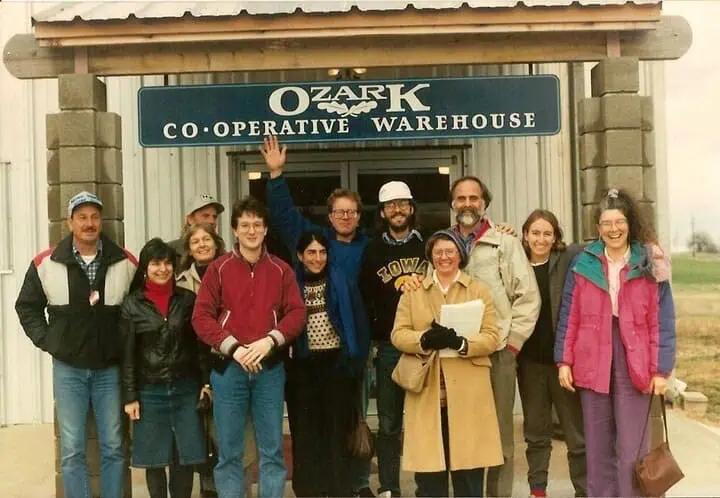
While OFAC remained active into the 90s, the group lost momentum following the passage of the 1990 Farm Bill. Many members couldn’t afford the frequent meetings or the time away from the field, and at a 1994 meeting, the group officially dissolved.
Though the OFPA had passed, there was still a decade-long public debate before national organic regulations were finalized and officially went into effect in 2002.
During this time of negotiation, the USDA published a highly contentious first draft of the organic program rule in 1997 that allowed what we now know as “the big three” (genetically modified crops, sewage sludge, and irradiation) in organic production. (14) In response, hundreds of thousands of citizens made public comments criticizing the USDA’s failure to uphold organic integrity in our national standards.
Fortunately, even with the absence of OFAC, organic farmers were still well represented in these discussions through farmer-led organic organizations across the country. The National Campaign for Sustainable Agriculture (now NSAC) was on the rise, and its Organic Committee stepped into the gap left by OFAC, bringing farmers to D.C. and training them to lobby for themselves and testify at hearings.
Additionally, four farmers were represented on the NOSB, and NOSB meetings around the country were well attended by organic organizations and organic farmers who provided testimony on behalf of farmer priorities.
Though the final National Organic Program (NOP) regulation was far from perfect, the voices of consumers and farmers helped to improve it significantly, setting more meaningful standards for organic certification that prevented the “big three” and other harmful additions from being included in the final rule.
Farmer Organization after OFPA
Following the long-anticipated 2002 implementation of organic regulations through the NOP, the industry saw several changes
An unintended consequence of implementing the NOP was that it established stricter rules to prevent conflicts of interest within certifying organizations; (15) thus limiting certifiers’ ability to be involved in advocacy and education. As a result, many certifiers split into two joined entities so they could safely provide both the education and technical assistance farmers needed, as well as continue to provide local organic certification services. However, some agencies elected to either discontinue their certification services or their education and advocacy support for farmers. This change affected state and regional organic farmer movements and, in some cases, led farmers to reduce their engagement within these organizations, where previously their voices had a direct impact on organic standards at the local level. But organic farmer leadership remained strong in organizations focused on farmer-to-farmer information sharing, creating an organized organic extension network to support a growing organic market and advance farmer-led advocacy for organic integrity.
When OFAC dissolved, it left a gap in organic advocacy. The group formerly provided a collective organic farmer voice within OFPANA, now the Organic Trade Association (OTA), but following OFAC’s dissolution, OTA lost much of its farmer membership. The OTA 2002 Board noted reincorporating a farmer voice in OTA work was important, (13) yet the lack of a national organic farmer voice made realizing this intention more difficult.
The National Campaign for Sustainable Agriculture merged with the Sustainable Agriculture Coalition in 2009, becoming the National Sustainable Agriculture Coalition (NSAC). (16) During the years leading up to this merger, the Organic Committee lacked the protected space to monitor and advocate for strong organic standards that upheld farmers’ and consumers’ shared vision for organic integrity. In 2003, the National Organic Coalition (NOC) was formed by an alliance of organizations (17) seeking a platform for diverse stakeholders—from farmer organizations to food businesses, consumers, and environmental groups—to share perspectives and advocate for organic interests in Washington, D.C.
Multiple Turning Points
It is difficult to say who first recognized the need for a national organization for organic farmers, but there are many accounts of farmers and stakeholders discussing the need for such an organization throughout the 2000s.
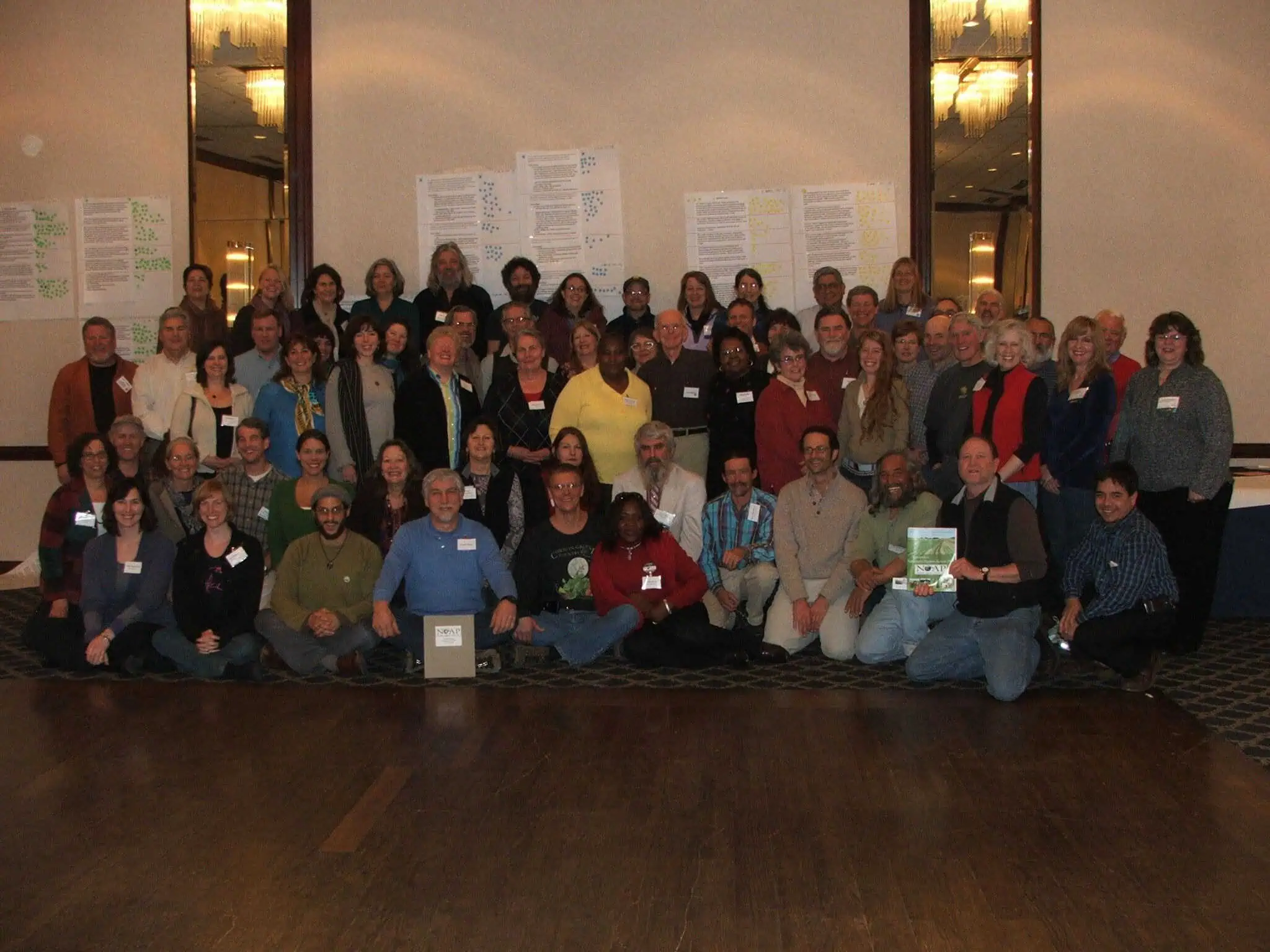
In 2006, noting the lack of a clear vision for the future of the US organic industry, leaders at the Rural Advancement Foundation International-USA (RAFI-USA) and NOC launched the National Organic Action Plan. (18) This plan, modeled after organic action plans in Europe, was meant to establish clear industry benchmarks and motivate coordinated efforts to grow the US organic industry. To create this plan, dialogue meetings were hosted in 28 states, engaging 300 participants in day-long discussions about the future of organic agriculture. Jim Riddle, who was on the NOAP planning team and later chaired OFA’s Steering Committee, recalls that while meeting with organic stakeholders to discuss NOAP priorities, establishing a national Organic Farmers Association was clearly identified as a need and NOAP recommendation. (19)
Meanwhile, tensions were building within the organic industry as OTA pushed forward with a policy to create an organic commodity checkoff program that farmers were largely against. (20) In response, the No Organic Checkoff coalition, a group of organic farmer member organizations and businesses, was formed to provide a farmer voice to counter this effort. (21) Though much smaller than OFAC, this was the second time organic farmers were seen mobilizing nationally. Some farmers and farm organizations previously involved with OTA felt underrepresented and saw the need for a new separate organization focused on organic farmer priorities. Even those who were satisfied with the work of NOC recognized the importance of having a farmer-only voice in the national organic conversation.
What are Checkoff Programs?
Checkoff Programs are dedicated to promoting or researching specific agricultural commodities. Producers and handlers selling any of 22 commodities (including milk, pecans, and mangos) are required to pay a small tax on marketed products to fund national research and promotion boards administered by the USDA Agricultural Marketing Service. The proposed organic checkoff could have taxed all organic producers and handlers to support promotion of individual organic sectors as well as all organic. As of 2016, organic producers are exempt from paying into conventional checkoff programs. Learn more here
Early OFA
Bob Quinn, a Montana organic farmer, and Michael Sligh, a North Carolina organic farmer and Policy Director at RAFI-USA, both served on the first NOSB in 1992 and reconnected two decades later. Realizing that they had both unknowingly been working towards the same goal of forming a national organic farmer organization, with Quinn connecting with farmers in the West and Sligh mobilizing farmers in the rest of the country through NOAP and NOC, they combined forces to create an Organizing Committee of the Organic Farmers Alliance (OFA) with fewer than 10 members.
Membership on the OFA Organizing Committee grew as organic farmers and organic farm organizations learned of the effort, and in 2015, this group of volunteers contracted with Kate Mendenhall, now the executive director of OFA, to help facilitate this committee, survey farmers nationally to assess farmers’ interest in a national organic farmer voice, and then direct the creation of this organization.
The founding OFA Organizing Committee members appointed the first OFA Steering Committee in 2016 representing two organic farmers from each of OFA’s six regions and one organizational representative from each region for an interim 18-month term to work with the Organizing Committee to review, discuss, edit, and ratify the foundational principles, bylaws, policies, and procedures for how a national Organic Farmers Alliance would function, communicate, and take action, and prepare for the first national election of OFA leadership in 2018.
Around this same time, OFA learned from Jeff Moyer that Rodale Institute had also been working to create a national organization for organic farmers called the Organic Farmers Association.
Both the Alliance and Rodale Institute believed that having two similar organizations would disorganize the movement, so they discussed a merger. While OFA had done the grassroots work of organizing farmers, they didn’t have much in the way of financial means, so it quickly became clear that merging with Rodale Institute as the group’s fiscal sponsor would be mutually beneficial.
Finally, at a 2017 meeting in Lacrosse, WI, the Organizing Committee and Steering Committee voted on the merger, and the Organic Farmer Alliance became what we now know as the Organic Farmers Association (OFA). Later that year, OFA farm members elected its first Policy Committee and held its first meeting on October 10, 2017, via conference call. OFA elected its first Governing Council to replace the appointed Steering Committee in March 2018.
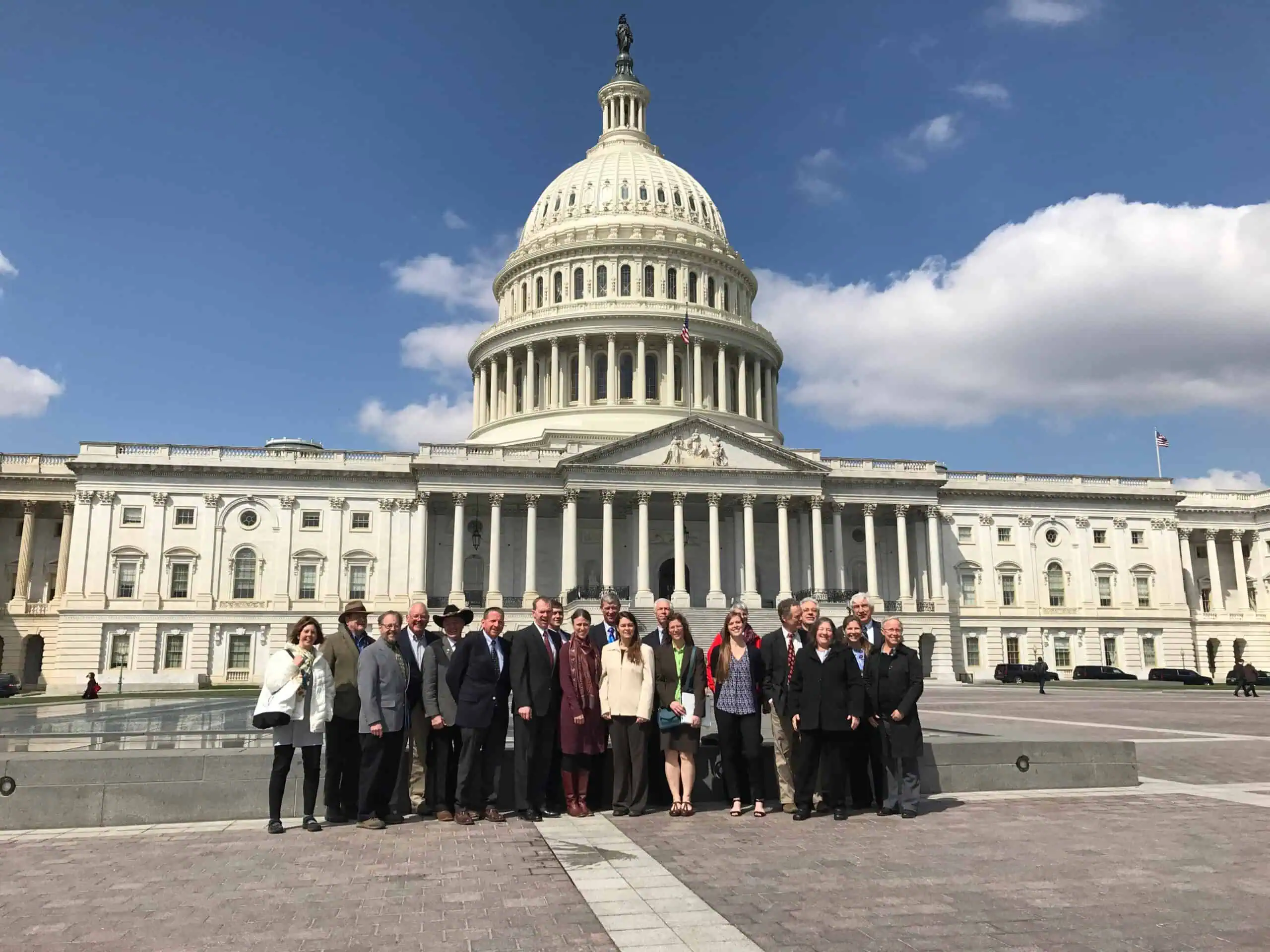
A month later, it held its first advocacy day in Washington, D.C., bringing farmers from across the country to educate Congress on organic farmer priorities and advocate for policies that strengthen organic farms. In 2020, OFA was established as an independent 501(c)(5) nonprofit organization and also maintained a fiscal sponsor relationship with Rodale Institute for educational programming support. And, as of a few weeks before this article’s publication, OFA was granted 501(c)(3) status, launching a new era in our journey and a fitting milestone to mark a decade of meaningful work.
This article was originally published in the November 2025 Organic Voice magazine, and research and written by OFA Communications Intern Aparna Nidamanuri.
Help us document history! Send OFA your photos (from the past or present) here.
Sources
1. Our Story. Rodale Institute. https://rodaleinstitute.org/about/our-story/
2. A Brief History of MOFGA. Maine Organic Farmers and Gardeners Association. https://www.mofga.org/mofga-history/
3. History. Northeast Organic Farming Association of Vermont. https://www.nofavt.org/about/history
4. Our History & Organic 3.0. IFOAM Organics International. https://www.ifoam.bio/about-us/our-history-organic-30
5. Our History. California Certified Organic Farmers. https://www.ccof.org/about/history/
6. Mission. Oregon Tilth. https://tilth.org/about/mission/
7. Carmen Fernholz Papers. Wisconsin Historical Society. https://digicoll.library.wisc.edu/cgi/f/findaid/findaid-idx?c=wiarchives;cc=wiarchives;view=text;rgn=main;didno=uw-whs-mss01164
8. Greene, C.R. (2001). U.S. Organic Farming Emerges in the 1990s: Adoption of Certified Systems. USDA ERS. https://ers.usda.gov/sites/default/files/_laserfiche/publications/42396/31544_aib770_002.pdf
9. Ellsworth, J. (2001). The History of Organic Food Regulation. Harvard Library. http://nrs.harvard.edu/urn-3:HUL.InstRepos:8889458
10. OFPA & NOSB. National Organic Coalition. https://www.nationalorganiccoalition.org/ofpa-nosb
11. S.2830 – 101st Congress (1989-1990): Food, Agriculture, Conservation, and Trade Act of 1990. (1990). https://www.congress.gov/bill/101st-congress/senate-bill/2830/text
12. 1989-1994 OFAC Organic Farmers Association Council. Roger Blobaum. https://rogerblobaum.com/organic-farmers-associations-council-ofac/
13. DiMatteo, K. & Gershuny, G. (2007). The Organic Trade Association. Organic Farming: an International History. https://www.cabidigitallibrary.org/doi/pdf/10.5555/20073257649
14. National Organic Standards. Beyond Pesticides. https://www.beyondpesticides.org/programs/organic-agriculture/keeping-organic-strong/national-organic-standards
15. 7 CFR 205.501 https://www.ecfr.gov/current/title-7/part-205/section-205.501
16. History and Accomplishments. National Sustainable Agriculture Coalition. https://sustainableagriculture.net/about-us/history/
17. National Organic Coalition. RAFI-USA. https://www.rafiusa.org/programs/just-foods/national-organic-coalition/
18. The National Organic Action Plan (NOAP). RAFI-USA. https://www.rafiusa.org/programs/just-foods/national-organic-action-plan/
19. (2010). National Organic Action Plan (NOAP): From the Margins to the Mainstream: Advancing Organic Agriculture in the US. RAFI-USA. https://www.rafiusa.org/national-organic-action-plan-2/
20. (2018). USDA Rejects Organic Checkoff Proposal. Cornucopia Institute. https://www.cornucopia.org/2018/05/usda-rejects-organic-checkoff-proposal/
21. (2018) No Organic Checkoff Coalition applauds USDA finalizing organic farmers’ exemption from commodity check-offs. NODPA. https://nodpa.com/n/80/No-Organic-Checkoff-Coalition-applauds-USDA-finalizing-organic-farmers-exemption-from-commodity-check-offsz
Join the Organic Farmers Association and Have Your Policy Needs Heard
OFA is the only national organization where certified organic farmers set and lead policy priorities. Join organic farmers and supporters across the country advocating for the policies that protect small and midsized family farms.
Farm
Membership
For U.S. Certified Organic Farmers
As a Farm Member, you have full voting rights on OFA’s policy positions and priorities making you a direct decision-maker in the national organic movement.
Supporter Membership
For Anyone Who Believes in Organic Farming
Not certified organic? A concerned consumer? Retired organic farmer? You can still make a difference! Supporter members receive policy updates, action alerts, and opportunities to advocate on behalf of organic farmers nationwide.
Organization Membership
For Organizations Serving Organic Farmers
Extend your network and give your members a stronger national voice. Organization Members get advocacy tools, policy resources, and direct connection to the broader organic farming community.