
OFA discusses immigration with Dave Runsten, CAFF Policy Director and OFA leader
Raising good clean food requires a lot of labor. Immigrants have been critical to meeting the agricultural labor demand. Farm labor is skilled labor, and over the last decade, farms have increasingly had difficulty finding reliable labor to plant, weed, harvest, milk—all the crucial support farms need to raise healthy delicious food. Many farmers have found local U.S. citizens to be uninterested in farm work, so legal immigrants have been especially important to meeting the labor needs of small and mid-size organic and family farms across the nation.
Immigration reform is sorely needed and it’s an issue Congress has been working on for the last decade without much success. Organic Farmers Association supports a comprehensive immigration reform that supports the current needs of farmers and farmworkers. This year, Congress is working on streamlining the H2A temporary agricultural program for guestworkers, which would speed up the process of bringing foreign workers into the U.S.. It would allow for more workers to stay in the country year-round rather than for 10 months or less.
To better understand the labor demands of the nation and what these potential changes to H2A mean for organic and family farmers, we interviewed Dave Runsten, a member of our policy committee and Policy Director for the Community Alliance with Family Farmers (CAFF). CAFF is a California-based nonprofit geared towards sustainable food systems and strengthening family farms.
What is the farm labor demand and how is it met?
“It is normally the case that farm workers grow up on farms,” Runsten said. “So few people in the United States grow up on farms today—probably little more than 1% of the US population lives on farms—that we have few people growing up accustomed to farm work. As a result, we have become more and more dependent on immigrants from countries where more people live on farms. Also, farm laborers were mostly excluded from U.S. labor laws and so lack many of the protections available in other sectors.” This has discouraged U.S. citizens from entering the agricultural workforce, especially with historically low agricultural wages.
Immigrants, Runsten argues, have been and will continue to be essential for meeting labor demands on American farms. In California alone, about 95% of agricultural workers are immigrants.
“Because of the extensive historical reliance on immigrants to perform farm labor and because of the lack of an available domestic workforce, it will not be possible to continue labor-intensive agriculture without immigrants,” he said. “Many studies of the effects of immigrants on U.S. workers have conclusively shown that immigrants are largely complementary to U.S. workers and that the society benefits greatly from their presence.”
How do agricultural labor demands differ across the country?
The West Coast employs a majority of the nation’s farm labor. “Half the labor demand is on the West Coast, and the rest is spread all around the country,” Runsten explained, adding that farm labor needs also vary greatly depending on the region. Unlike other parts of the nation that rely heavily on seasonal labor, the work demanded in California and other more temperate West Coast states takes up much more time out of the year.
More labor-intensive methods of agriculture require more workers as well. This includes organic farming, since it is more labor-intensive than conventional practices, and fruit and vegetable production in general. “Labor-intensive fruit and vegetable production has extensively relied on immigrant workers for most of the past century,” Runsten explained. In addition, many northern dairy states are increasingly dependent on year-round immigrant labor to help with multiple daily milkings and all the labor associated with caring for dairy herds. This labor need is often less visible but increasingly necessary for rural farmers in dairy states.
What are the needs of organic and family farmers?
“Most organic farmers don’t use the H2A program because it’s too expensive for them,” Runsten said. “The family farmers we’re working with [at CAFF] don’t use it either.” H2A employers have to provide housing for their workers, a cost that usually only large operations are able to take on. Because of this, many organic farms prefer hiring U.S. citizens, since H2A isn’t a viable financial option for them.
“The organic farmers we work with at CAFF hire workers directly,” Runsten said. “They just want more workers available—people who are legally here and want to work.” According to Runsten, it’s also important to California organic and family farmers to have workers who stay in the U.S. Workers under the H2A program can’t bring their families with them to the U.S. and will periodically go back to their home countries, not participating in the local community as residents. That can lead to a lot of turnover in your labor force. For a small business constant turnover is not efficient nor cost-effective. “In California, most farmworkers are settled, have family, and don’t move around much,” Runsten explained. “We need more people to be farmworkers and to live here.”
What is OFA advocating for?
OFA supports legalizing the existing farm labor force, keeping the current H2A program as is for those who need it, and adding an agriculture work-visa program for workers to receive a green card, if desired, after a certain period of required agricultural work. Relying less on the H2A program and more on legal immigrants would allow for more small and mid-size farms to meet their labor needs at a cost that they can manage. The growth of the uncapped H2A program could be unprecedented, likely exceeding 300,000 placements in 2019, but this will benefit few farms and not address the agricultural labor needs of the majority of small to mid-size organic and family farms.
“At present only the largest farming operations are using this program on the West Coast,” Runsten pointed out. “They are using farm labor contractors as intermediaries to recruit and manage the workers on probably fewer than 100 farms.” According to Runsten, expanding H2A “will lead to consolidation of farming and possibly eliminate many diversified family-scale farms.” Runsten also foresees attempts of crop mechanization and moving crops that cannot be mechanized offshore if H2A continues to greatly expand.
Expanding H2A also means that there will be more agricultural workers with poor benefits, attached to their employer, unable to change jobs and settle in the U.S. with their families.
“We want people to be immigrants, not temporary guests,” said Runsten. “We want workers to have the hope of getting a green card, joining their family, and being part of the community.” Organic farming is about care and justice as much as it is about ecology and health, and farms need a consistent work force that can continue to grow in skill and commitment to the farm business.
“Farmers across the country recognize that the United States needs a rational immigration policy that will allow them to hire the workers they need, and that those workers should be in the country legally and should have a path to legal permanent residency and bringing their families.”
By adding an additional pathway for workers through an agricultural work visa, the organic community would be better equipped to meet their businesses labor needs and stay in business.
Act Now!
Organic consumers: call or email your member of Congress and Senators to encourage them to pass legislation that would legalize the existing farm labor work force by creating a pathway for agricultural workers visas to help organic farmers be better equipped to meet their labor needs and stay in business. The House of Representatives has been working on developing an immigration bill.
You can find your Representative by going to House.gov and entering your zip code.
You can find your Senator’s contact information at Senate.gov.
If you call, ask for the immigration or agriculture legislative assistant. Ask them to support legislation that would legalize the existing farm labor work force by creating a pathway for agricultural work visas to help organic farmers be better equipped to meet their labor needs and stay in business.
If you email, cut and paste the following:
Pass legislation that would legalize the existing farm labor work force by creating a pathway for agricultural workers visas to help organic farmers be better equipped to meet their labor needs and stay in business.


Policy update from the House Ag Committee's hearing
 Update from Mark Rokola, Policy Director.
Trump Administration’s Department of Agriculture completed its first hearing before the Democratically controlled, House Agriculture Committee’s Biotechnology, Horticulture and Research Subcommittee “Assessing the Effectiveness of the National Organic Program” last week.
House Democrats invited Greg Ibach, Undersecretary of USDA’s Regulatory and Marketing Programs, which has jurisdiction over the National Organic Program (NOP), to join them in a public hearing to discuss the agency’s operation of NOP.
The hearing was the first public opportunity for the Agriculture Committee to engage with the Trump Administration’s USDA in a public discussion of its operation of NOP. Organic Farmers Association expects this to be the first step in a process to learn about the Trump Administration’s goals for the organic industry.
Under Secretary Ibach quickly pointed out in his opening statement the unique public-private partnership that is key to the success of this organic industry. He added that between October 2018 and March 2019, NOP received about 260 complaints and inquiries. NOP continues to meet its target of resolving 90 percent of appeals within 180 days of receipt.
Organic Farmers Association has been working with Subcommittee Chairwoman Stacey Plaskett (D-VI) staff to explain our members’ top policy goal of maintaining the integrity of the organic seal.
One of the top priorities for House Democrats was to better understand how an Administration that won its election on a de-regulation message and implemented an Executive Order of eliminating two regulations for every new regulation created, plans on creating new regulations to improve program integrity.
We explained to the Subcommittee Chair’s staff that organic regulations are different than other government regulations because they are voluntary. Producers do not have to comply—only if they want to receive the organic label—so in this case strict regulations are needed and those being regulated are asking to improve the program to maintain consumer trust in the label.
On your behalf, we submitted questions asking USDA how it is managing its partnership with other federal agencies as it monitors organic imported grain. We asked for details on how the agency is leveraging its partnerships with USDA’s Office of Inspector General and Department of Homeland Security’s, Custom and Border Protection (CBP) to build their resources to fight fraud through collaboration and training.
We also asked for details on how many trainings the NOP has held for CBP Center of Excellence and Expertise for Imports.
We encouraged USDA to provide details on increased oversight of pasture rule compliance for dairies—ensuring that dry matter intake from pasture is being measured just for milking cows to meet the 30% dry-matter intake requirement and that days on pasture align with the Natural Resources Conservation Service average county grazing days and exceed the minimum 180 days whenever possible.
USDA said they de-certified a satellite office of an international certifier this past May. Resulting in 180 farms not seeking re-certification. USDA also referenced their work at the Philadelphia port with APHIS to return a shipment of bell peppers that had been fumigated.
The Undersecretary said that USDA hopes to have an Origin of Livestock Rule to the interagency review group this Fall. Congresswoman Pingree said it was acceptable the USDA would have a rule out in 2019 as the agency had all the information they needed. And, that a vast majority of the organic industry supports the proposed 2015 Rule that would remove loopholes for raising dairy heifers.
Keep an eye on future e-briefs or contact Organic Farmers Association for more details on the hearing.
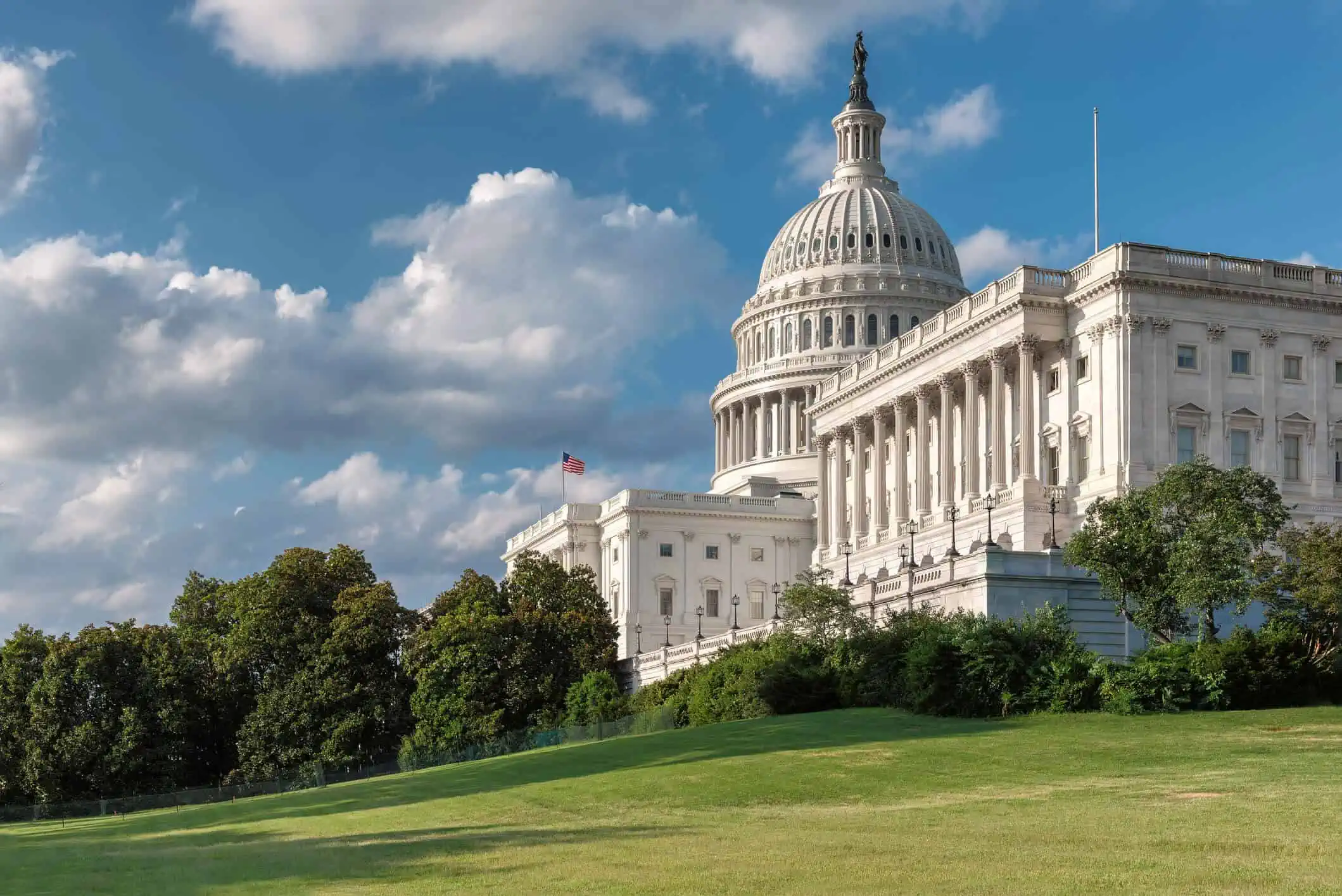
The House of Representatives started working on funding FY 2020
Update from Mark Rokala, OFA Policy Director
The House of Representatives started work on funding the federal government for Fiscal Year 2020 last month. The topline budget number is needed to determine how much money each appropriation subcommittee can spend.
So, how does this impact organic farmers?
The $18 million we asked for the NOP stands a good chance of being lowered, along with organic data funding and other programs used by our members. We will work with other organic advocacy groups to educate the Senate on the value of our organic programs. If needed, we will be reaching out to you to lobby your local Congressional staff.
The House had based its 2020 budget work on a $24.31 billion budget, more than $5.1 billion above the budget request.
On the Senate side, we are waiting for the results of the Senate Republicans and the Administration’s decision on FY20 funding before taking the next step for the Ag Appropriations bill.
OFA staff expect the Senate Agriculture, Rural Development, Food and Drug Administration and Related Agencies Committee to base this year’s bill on last year’s funding level. We should expect to see flatline spending from many programs.
The House bill included language telling USDA to implement the 2015 Origin of Livestock Rule to close loopholes in the organic regulations. We still need your help to request that the Senate Appropriations committee include the same language. Thank you to all who have reached out to your elected officials, and there is still time to do so if you haven’t already!
Spending levels and policy changes for your favorite programs are still a long way from being finalized. Please keep an eye out for any OFA legislative alerts during the summer and early fall.

Organic Farmers Association Announces 2019 Policy Priorities
Policy platform includes Origin of Livestock Rule, Green New Deal, farmer representation on NOSB, and immigration reform
June 18, 2019 (Kutztown, Pennsylvania): Organic Farmers Association (OFA), a national policy association committed to providing a strong and unified voice for domestic certified organic farmers, recently announced their 2019 policy platform. To view the policy priority details, visit OrganicFarmersAssociation.org/Policy-Position.
Organic Farmers Association’s policy priorities serve as an outline of the advocacy the organization will conduct in Washington, D.C., representing organic farmers on a national level. Policy priorities approved by OFA farmer members in 2019 include increased support for beginning farmer and market development, streamlined crop insurance requirements, and dedicated funding for organic public seeds and breeds research.
In 2019, Organic Farmers Association will also advocate for:
- The publication and immediate implementation of a Final Origin of Livestock Rule, governing the transitioning of a non-organic dairy herd to organic, incorporating changes to eligibility, strengthening organic accountability for dairy animals, and outlining prohibited activities.
- Implementation of policies that encompass the vision of a Green New Deal that recognize the role of organic agriculture in mitigating climate change and provide Organic Farmers Association a seat at the table.
- Requiring that the farmer-seat on the National Organic Standards Board be filled by a farm operator (as defined by the USDA-ERS). Organic Farmers Association has endorsed numerous qualified NOSB farmer applicants and urges the choosing of a real farmer for the vacancy.
- Immigration reform that provides just options for organic farmers and farm workers that legalizes the existing farm labor force, retains the current H-2A program, and introduces an agricultural work visa program.
“Our policies come straight up from the grassroots of the U.S. organic farmer community across this nation. These are the policies they are most concerned with in 2019 and OFA will be there advocating on their behalf,” said Kate Mendenhall, Director of Organic Farmers Association. “It’s impressive that all of our 2019 policies were supported by each region across the nation—organic farmers are united in their national priorities.”
To develop the annual policy platform, Organic Farmers Association solicits input from all U.S. certified organic farmers and organic farm organizations. Submissions are then reviewed by the OFA Policy Committee who submit policy statements to OFA members for comment. U.S certified organic farm members then vote on policy positions to determine the final policy platform.
Adoption of an OFA policy priority requires 60% of the popular national vote and 60% popular support in at least two-thirds of the six OFA regions. OFA follows a “one farm, one vote” model in which every certified organic member farm, regardless of size, receives one vote on policy issues.
Organic Farmers Association is committed to building a farmer-led national organic movement and national policy platform by advocating for policies beneficial to organic farmers, strengthening and supporting the capacity of organic farmers and farm organizations, and supporting collaboration among state, regional, and national organic farmer organizations. Organic Farmers Association is supported by its fiscal sponsor Rodale Institute.

Action Alert: We Need Your Help for Organic Dairy
The House Committee on Appropriations Agriculture, Rural Development, Food and Drug Administration and Related Agencies Subcommittee included language in their FY20 bill last week instructing USDA to implement the 2015 Origin of Livestock Rule. The Organic Farmers Association is asking for your help to encourage the Senate to close loopholes that exist by including the same language in their bill.
Please call or email your Senator's Agriculture Legislative Assistant this week to ask that they reach out to the Senate Appropriations Subcommittee on Agriculture, Rural Development, Food and Drug Administration and Related Agencies to include the following bill language in their FY20 proposal.
To find your Senator's Email & Phone Number: https://www.senate.gov/general/contact_information/senators_cfm.cfm
Talking points for an email/phone call:
Dear Staff,
I am an organic farmer/consumer and member of the <<YOUR ORGANIZATION>> in the state. One of our top appropriations priorities has been to tell USDA to close loopholes in the Origin of Livestock Rule. The House bill includes this language. We want to put all organic dairy operations on a level playing field, this requests helps level that playing field.
Could you please reach out to staff on the Senate Agriculture, Rural Development, Food and Drug Administration and Related Agencies Appropriations Subcommittee to ask them to include the following language in their FY 20 bill:
Not later than 180 days after the date of the enactment of this Act, the Secretary of Agriculture shall issue a final rule based on the proposed rule entitled ‘‘National Organic Program; Origin of Livestock,’’ published in the Federal Register on April 18, 2015 (80 Fed. Reg. 23455):Provided, That the final rule shall incorporate public comments submitted in response to the proposed rule.
This is the same language included in the House bill. Please let me know if you have any questions.
Sincerely,
<<Your Name>>

Representing Your Voice: National Organic Standards Board Meeting
The USDA National Organic Program’s (NOP) National Organic Standards Board (NOSB) met April 24-26 in Seattle, Washington. The NOSB follows a governmental hearing process for these meetings. While the meetings are set up to efficiently deal with a full agenda, it’s quite different from the more typically interactive meeting process many in the organic community are used to.
The hearing process involves a set up similar to what you might see at any official hearing with a governmental committee or board. The NOSB members are seated in a group in the front of the room facing the audience made up of organic stakeholders such as certifiers, organic farmer organizations, environmental organizations, consumer groups and farmers. The meeting was opened with reports from Harriet Behar the chair of the NOSB and Jenny Tucker Deputy Administrator of the NOP. Following that the Board heard from a couple of working groups discussing organic celery powder and its use in organic meat processing and the use of synthetic methionine in organic poultry feed. This was followed by public testimony, which lasted into the morning of the second day. Kate Mendenhall, OFA Director, provided testimony for OFA on the first day. The remainder of the meeting, about a day and a half, involved deliberation of the various recommendations to the committees of the Board. This involved discussion of over fifty materials either petitioned or under sunset review by the Board.
The NOSB working agenda for this meeting is determined by the National Organic Program. Typically comments and testimony relate to the agenda scheduled to be discussed. However, the majority of the comments at the April meeting strayed from direct NOSB agenda matters and focused instead at areas of discontent within the organic community. There was a lot of discussion on two areas currently of concern with the National Organic Program.
- Origin of Livestock Standards
- Organic Certification of Hydroponic Production
Many organic dairy farmers from Washington State testified to the importance of moving forward with a final rule for Origin of Livestock. Dairy farmers nationwide are hurting financially because of the glut of organic milk in the marketplace. The organic farming community is united on the need for swift action from USDA on moving the Origin of Livestock to a final rule in 2019 and stopping the loophole for large dairies to continually transition animals into their organic system, allowing for cheaper growth costs that have allowed for rapid expansion of large dairies.
OFA and other organizations challenged the National Organic Program to clarify whether outdoor container hydroponic farms were required to comply with the same three-year transition that soil-based farms are required to complete prior to organic transition. Even after continual pressure for clarity from OFA, NOSB members and other organic organizations, National Organic Program could not clarify that the national organic standards require a three-year transition. Organic Farmers Association feels this is unacceptable and undermines the work organic farmers have done to promote healthy soil and contribute to clean air and water since the inception of the NOP almost two decades ago. We will continue to hold them accountable and demand that they clarify national organic standards that comply with the Organic Foods and Production Act.
We thank the members of the National Organic Standards Board for the immense amount of volunteer time they contribute to advising the National Organic Program and for supporting transparent involvement from the organic community.
The next NOSB meeting is scheduled for Pittsburg, PA October 23-25, 2019. See further details here. We will be encouraging a lot of FARMER PARTICIPATION at this meeting, so please mark your calendars and contact us if you would like to participate.

Action Alert: NOP must do better to keep fraudulent grain imports out of the US
U.S. organic farmers identified organic import fraud as your number one priority issue for OFA’s work in 2019. We are here to work for you, and now we need your help.
On Friday, May 3, 2019 Organic Farmers Association received a tip that a ship loaded in Turkey was destined for a North Carolina port with a high-risk shipment of bulk organic grain. We were notified that the USDA National Organic Program (NOP) had been alerted to this ship through a formal filed complaint. OFA asked a contact in North Carolina to request that the North Carolina Department of Agriculture and Consumer Services (NCDACS) call their local Customs and Border Protection (CBP) office to alert them of this high-risk ship and that its organic status should be verified before the bulk cargo was unloaded and then distributed in the United States. On Monday, May 6, we were told NCDACS and CBP communicated effectively and CBP communicated with USDA NOP.
On Tuesday, May 7, we were told NOP told CBP the shipment was NOT fraudulent and did not ask CBP to inspect the ship—CBP couldn’t inspect for organic integrity without a request from USDA. Yet just two days later on May 9, the USDA NOP announced that they had revoked the accreditation of the organic certifier, Control Union, that was likely certifier of the grain on the ship. The grain onboard the ship was high-risk for organic fraud, and NOP knew that, yet NOP did not use their relationship and authority with Customs and Border Protection to act to protect U.S. organic farmers and consumers.
We find this unacceptable. We need your help.
Please call or email your Congressperson and Senators with the below message:
To call your Congressperson and Senators, dial the capitol switchboard: (202) 224-3121
Click here for your Congressperson’s email. Click here for your Senators’ emails.
On May 7, USDA National Organic Program did not permit Customs and Border Protection to inspect allegedly organic grain onboard the bulk cargo ship at a North Carolina port—even though they were just about to revoke accreditation of the organic certifier who had certified this grain—making the grain high risk for fraud. U.S. organic farmers and consumers deserve better protection from our government. We would appreciate your help in this matter.
Would you please call USDA Marketing and Regulatory Programs Under Secretary Greg Ibach, who is responsible for the National Organic Program (NOP), at 202-720-3631 and ask that for every ship importing bulk or container organic products (most will carry an organic import code), the NOP request Customs and Border Protection (CBP) to check the following four things as standard protocol:
- Require use of the appropriate organic import code. Verify and notate code.
- Check for a valid organic certificate or other paperwork identifying the organic status of the cargo.
- Check for pesticide residues by taking a pesticide residue test of the cargo. If it is under the "5 percent of EPA tolerance" for that pesticide, then the cargo can be verified as organic. If the residue is above the 5% of EPA tolerance threshold it should be marked as conventional and not permitted to be unloaded as organic and USDA NOP should be notified.
- Check for increased risk of carrying insects and pests. If CBP requires that fumigation be used on the cargo, the cargo should be marked as conventional and not permitted to be unloaded as organic and USDA NOP should be notified.
We need better protection of U.S. organic farmers and consumers at our borders. Fraudulent organic imports need to be stopped. We ask you to strongly encourage USDA NOP and CBP to immediately implement this protocol at U.S. borders for all organic organororganic organic bulk imports.

How to build a relationship with elected officials
Summertime for members of Congress and Senators means getting out to meet constituents and to learn about their hot topic issues. Elected officials consider introduction to voters as a seven-day a week, 365 days a year opportunity. They use the District work periods of the holiday weekends (Memorial Day, July 4th, the Labor Day) and the August Recess to participate in as many summer parades and town celebrations as possible.
They know that for every hand they shake and constituent they interact with, the better the chance that constituent will vote for them.
More importantly to the Organic Farmers Association, it allows you the opportunity to interact with your elected official to teach them about your organic business, organic integrity and our Association.
How do you develop a relationship with your elected official?
- Seek out your elected officials at public events. Congressional offices routinely publish their Congressperson’s District schedule because they want constituents to attend.
- Invite your elected official to your farm or business. Just as important, you should invite staff to your farm or place of business. They play a very important role in collecting and processing information for the elected official.
To speed up the process of requesting a meeting, reach out to your elected official’s staff in the state office. You can find their contact information by going to House.Gov, enter your zip code in the “Find your Representative” box to take you to your Member’s website. Local contacts will be listed there. For the Senate, go to Senate.gov and pick your state for the same information.
- Be patient as each member of Congress has about 700,000 constituents. And, each state has two Senators.
You can increase your chance of securing a meeting by inviting neighbors and fellow organic farmers and your business partners to attend the meeting. You will need to drive that meeting request process by repeatedly following up with the office. Remember, the squeaky wheel gets the grease. Put the local office number into your cell phone so you can call back easily.
- Prepare for your meeting once it is scheduled. Invite the local newspaper or agriculture publication to stop by towards the end of the meeting, make sure you let the member of Congress know press will be attending.
You have several goals for the meeting:
First, to have the elected official understand your role in the organic market, and to understand the opportunities and threats to your business. We want the official to think of you when they have a question about an organic policy and issues.
Your next goal is to help your elected official understand who Organic Farmers Association is and the work we do. Explain how our policy priorities are developed by organic farmers. OFA’s policy positions are on our website. Reach out to us if you have questions or concerns on policy related items or the organization.
And, most importantly, you want to develop a long-term relationship with your elected official. When the elected official thinks of organic food and farming, we want them to think of you. We are a grassroots organization. You can, and will, provide important information.
The member of Congress will arrive with a staff member for your hour-long meeting. Explain your business, what happens to your business if consumers loses confidence in the NOP seal, and challenges you see facing your business. Make notes of their questions and interests. Let us know of those interests, questions, or concerns. That is important information for OFA to follow up on.
Post meeting follow up work includes updating the organization on the meeting, follow up with a thank you to the elected official and staff that attended and creating a plan to update them on organic issues of the day.
Let us know if you have any additional questions or needs as you work to develop a relationship with your elected officials.

Director, Kate Mendenhall, Provides Oral Comment at NOSB Meeting- Spring 2019
Organic Farmers Association's Director, Kate Mendenhall, provides oral comment at the 2019 Spring NOSB meeting in Seattle, Washington. Read her full statement below:
Thank you, members of the National Organic Standards Board for the opportunity to speak before you today.
My name is Kate Mendenhall, I am the director of the Organic Farmers Association and I am also an organic
farmer in northwest Iowa. Founded in 2016, Organic Farmers Association provides a strong and unified national
voice for domestic certified organic producers. We are led and controlled by certified organic farmers—only
certified organic farmers drive our policy positions and our policy work agenda. We have farmer-members in 48
of the 50 states.
Organic Farmers Association greatly supports the work and role of the National Organic Standards Board and
finds your role paramount in maintaining integrity in the USDA organic label.
Organic farmers were active in every step towards building our national organic movement and market, and we
believe organic farmers deserve a driving seat in setting the future of the organic label. Our 2019 certified
organic farmer policy survey identified five top priorities from the wider certified organic farmer community—
feedback that extends beyond our membership and invites all U.S. certified organic farmers to participate in.
This winter, organic farmers ranked the top five priority issues as:
- Organic Import Fraud
- NOP Enforcement to Ensure Organic Integrity
- Prohibiting Hydroponics in Organic Production
- Pasture Rule Enforcement
- Organic Dairy Standards & Enforcement
We urge the National Organic Standards Board to:
- Reaffirm their October 2018 resolution regarding Origin of Livestock urging NOP to move to a final rule
in 2019. - Encourage NOP to issue training and guidance for risk-based certification oversight in organic dairy
focusing on operations on the margins of the 30%DMI rule and dairies with 1,000 or more milking and
dry cows. - Call for the NOP to issue an immediate moratorium on any new hydroponic operations and return this
issue to the NOSB work agenda as a top priority. OFA believes the NOP should implement the 2010
NOSB recommendation to not allow certified organic hydroponics, but we recognize there is an
immediate urgency to put a moratorium on new hydro operations so that we can have more
conversation and consensus within the organic community. The current lack of uniform standards,
implementation, and enforcement for hydroponic certification is publicly undermining the integrity of
organic farmers nationwide. The lack of clarity around a 3-yr transition following the use of a prohibited
substance is unacceptable. This ambiguity to a clear rule enforced throughout the life of organic
certification calls to question the integrity of entire NOP program.
Thank you for the opportunity to address you today.

Harriet Behar's Opening Remarks at NOSB Meeting
Harriet Behar, chair of the NOSB and member of both OFA Governing Council and Policy Committee starts off the Spring NOSB
meeting in Seattle, WA with impressive opening remarks calling for action and organic integrity to defend organic on behalf of organic
farmers. Read her full opening remarks below:

The NOSB work is done by a dedicated group of board members and I
would like to let them introduce themselves
now. Please state your name, where you are from, and what seat you hold on the board, starting with…..
This is my first public meeting as chair of the National Organic Standards Board and I want to say what an honor it is to
work with such a fine group of dedicated board members who truly work to represent their constituencies concerns and well as the overall health and vitality of organic agriculture and marketplace as we debate and decide materials, guidance and regulations for submission to the National Organic Program. I especially thank the subcommittee chairs who put in extra time to make sure that everything goes smoothly and gets done on time. I have spent many years as a member of the public, watching these meetings and I can say that being on the inside has greatly increased my understanding of the process, both opportunities and challenges.
There is much positive to congratulate ourselves as organic advocates. The organic market is growing, organic consumers have access to food and fiber that is healthier for them and represents so many answers to the environmental challenges we face both regionally and globally. More farmers are continually improving their farming systems by applying fundamental and advanced organic farming practices, providing a healthy lifestyle and environment for themselves, their livestock and their local communities. In my mind, there is nothing more beautiful than working with and within the natural systems that have evolved so beautifully and elegantly on this precious earth. This is not an unachievable dream, I see it all the time on many excellent organic farms and my life is enriched both by continually improving my farm’s organic system and biodiversity each year.
But there are dark clouds obscuring some of this sunshine. Known cases of fraud and subsequent sale of nonorganic grains as organic into our markets, has highlighted the need to deal with the loopholes and grey areas in our regs and enforcement in an immediate and forceful way. This fraud has been discovered originating both from domestic and foreign markets.
There is unfortunately a long list of areas where enforcement and additional rulemaking is sorely needed ---pasture for ruminants, origin of livestock, outdoor access for poultry and other livestock, questionable uses of various materials, approval of hydroponic operations that do meet the same standard as soil-based operations, lack of consistently by the many certifiers, and the organic certification system needs more oversight and accountability. Fear that a client might legally challenge a certifier decision, has kept both the certifiers and the NOP to not regulate to the clear wording and intent in many of these areas, instead allowing clients to massage the regulatory language to fit their own operation. This does not hold everyone to the same high standard, and is one of the contributors to our current problematic situation.
The NOP has limited their work and the work of the NOSB. Various issues have been taken off the work agenda or the NOP has decided to not work on implementation of NOSB recommendations. Examples of areas that the public has noted in their recent comments include inerts, animal welfare, hydroponic both in water and in containers, BPA in packaging, peer review of the NOP accreditation system, apiculture, pet food and more. These items were all mentioned many times by various commenters at this meeting, including the former deputy administrator of the NOP, as areas of great frustration. The public has stated the NOP needs to develop better systems to address these important areas in a more timely way. We are a young program, in the bigger scheme of things, and when we find a grey area or a loophole in the reg, we should be allowed fix it as soon as possible before it becomes the norm, since this reg is still in its infancy and these problems were bound to come up addressed. Our community is tenacious and I do not doubt that these issues will continue to be part of the conversation until they are resolved.
I can see that the hard working NOP staff is working towards solving these problems and I commend deputy administrator Jennifer Tucker for her willingness to engage openly and transparently with the community. However, we are playing catch up to tighten up oversight and enforcement numerous areas of organic production, which is causing hardship in many sectors of organic. We need to become more proactive to catch problems before they become the norm. This is the responsibility of both the organic community and the program.
It is obvious we have passion and drive to keep pushing for consistency in the implementation of the high organic standards that we all work so hard to develop and provide the guidance to the National Organic Program. We are a very unusual agricultural sector, we want to be regulated, we want those regulations to be followed and we want them to be strict, yet practical.
I have visited literally thousands of organic farms, and many hundreds of organic processors. Organic production is not just a something they do, it comes from their hearts and has deep meaning in their lives. That organic certificate is something they are proud of, since it represents their intense commitment and the good work they are doing. Organic consumers count on us to make sure the food they are getting is what they expect it to be, organic. The NOSB and NOP have a responsibility to live up to their trust in our work.
We, the organic community, the organic marketplace, organic advocates, the NOSB and the National Organic Program cannot let down consumers and the vast majority of owner/operators on the farm and processors who are doing it right and are now competing with others who cut corners or commit organic fraud. We understand there are problems, but I encourage all commenters and board members keep in mind that we are here to find solutions. I believe that if we are willing, we should be able to find a way to improve our rules and enforcement in a timely way that honor the hard work and desires of the organic community. The entire organic community and marketplace depends on the integrity of the organic label, and without integrity we are nothing.
Lastly, I sit in the environmental seat on the board, and I continuously find myself in awe of the beauty and diversity of life on our planet. I have enough creatures that each of you should be able to choose one – marine life, farm animals, a variety of finger puppets, wind up baby chicks and a few especially cute frogs, choose which ever one calls to you.
Thank you.